
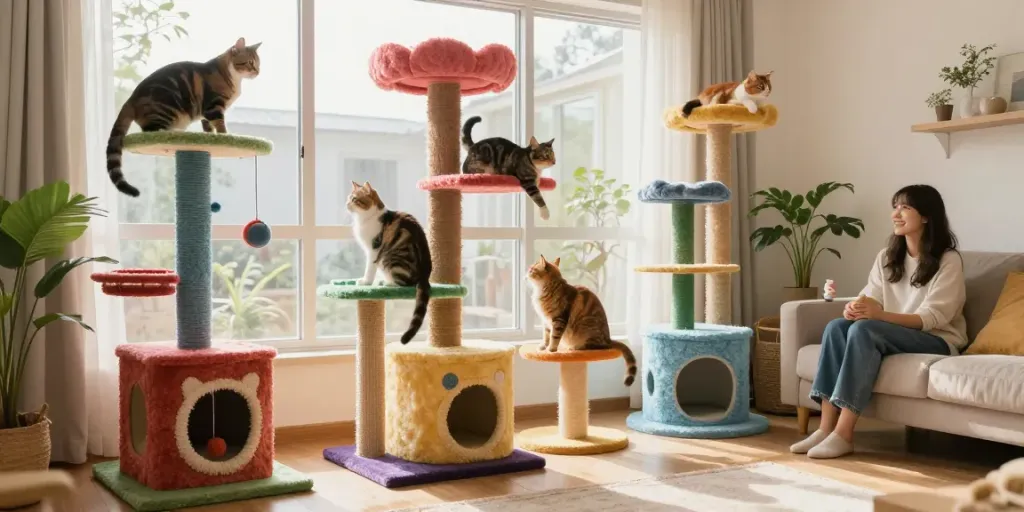
Understanding the Importance of Cat Trees
When it comes to creating an enriching environment for your feline friend, few items are as integral as cat trees. These structures not only serve as play zones but also provide vital spaces for rest and relaxation. Cat trees cater to the natural instincts of our cats, allowing them to climb, scratch, and stealthily observe their surroundings from above. Understanding the role of cat trees in your pet’s life is crucial to fostering a happy and healthy cat.
Why Do Cats Need Cat Trees?
Cat trees mimic the climbing environments that felines naturally thrive in, offering vertical spaces for them to explore and conquer. Cats are instinctively drawn to high places, which provide a sense of security and vantage points for observing their territory. A well-placed cat tree can alleviate stress and anxiety in indoor cats by catering to these innate behaviours.
Benefits of Cat Trees for Indoor Cats
- Physical Exercise: Climbing and jumping on cat trees provide essential physical activity, helping to prevent obesity.
- Mental Stimulation: Complex structures engage cats mentally, reducing boredom-related behaviours.
- Scratching Opportunities: Cat trees often include scratching posts, which are vital for maintaining healthy claws and deterring scratching on furniture.
- Safe Spaces: Cat trees can become a sanctuary where cats feel secure while watching their surroundings.
Understanding Your Cat’s Behavioural Needs
Recognising what your cat desires is essential for selecting the right cat tree. Different breeds may have varying preferences for scratching surfaces, height, and overall design. For instance, larger breeds such as Maine Coons will require sturdier and more spacious options compared to smaller breeds. Observing your cat's behaviour patterns can greatly assist you in making informed choices.
Choosing the Right Cat Tree
Choosing the perfect cat tree requires consideration of multiple factors, including size, material, and design. This decision will greatly impact your cat's satisfaction and your home’s aesthetics.
Factors to Consider: Size and Space
Before purchasing a cat tree, assess the available space in your home. A larger cat tree is ideal for homes with multiple cats or larger breeds, while smaller cat trees can fit snugly in compact areas. Measure the intended location to ensure the tree fits without overcrowding the room. A tall, multi-level cat tree can offer a vertical playground while occupying a minimal floor footprint.
Material Types and Their Benefits
- Wood: Provides durability and stability, making it suitable for larger cats.
- Cardboard: A lightweight option that’s ideal for temporary use; however, it may not withstand heavy scratching.
- Fabric and Plush: Offers comfort and warmth but may require more maintenance to keep clean.
Understanding Design Preferences for Cats
Each cat has individual preferences when it comes to design. Some may favour enclosed spaces where they can hide, while others prefer open platforms to perch and observe. Look for cat trees that offer a variety of features, such as caves, ramps, and different levels, to cater to these diverse needs.
Placement and Setup of Cat Trees
Once you've chosen the right cat tree, proper placement is crucial to maximise its use and benefit to your cat.
Optimal Locations for Cat Trees
Place the cat tree near a window or in a space frequently used by your cat. Cats love watching the outdoors, and being able to observe the world outside can make the cat tree a coveted spot. Avoid dark, unused areas of the home, as your cat may not be inclined to use it if it feels isolated.
Creating a Safe and Engaging Environment
Ensure the environment around the cat tree is safe and free from hazards. Surrounding it with familiar toys or resting spots can encourage exploration. Additionally, consider placing it in areas where your cat spends a lot of time, increasing the likelihood it will use the tree frequently.
Enhancing Accessibility with Multi-Level Structures
Multi-level cat trees provide opportunities for climbing and jumping, which are essential for physical health. Choose a structure that allows your cat to easily navigate between levels, and consider adding ramps or bridges for older cats who may struggle with jumping.
Maintaining and Caring for Cat Trees
Regular maintenance is essential to ensure that your cat tree remains safe and appealing.
Regular Cleaning and Maintenance Tips
Cat trees can accumulate hair and dirt quickly. Regularly vacuum the surfaces and spot-clean any stains. Consider using removable covers or blankets that can be washed to keep the tree hygienic.
Identifying Wear and Tear
Inspect your cat tree regularly for signs of damage. Scratching posts may need to be replaced, and any loose components should be tightened to avoid accidents. Keeping the tree in good condition ensures that your cat continues to feel safe and secure while using it.
Upgrading Features: Scratching Posts and Toys
As your cat grows and its needs change, you may want to upgrade elements of the cat tree. Look for replacement scratching posts that match your cat's preferences, and consider adding interactive toys or balls that can be hung from various levels of the tree.
Future Trends in Cat Furniture
The pet furniture industry is evolving rapidly, and trends in cat trees reflect a growing understanding of feline needs and preferences.
Innovative Designs and Eco-Friendly Materials
There is a noticeable shift towards sustainable materials in pet furniture production. Many manufacturers are now using recycled or environmentally friendly materials to create cat trees that are both stylish and eco-conscious. These trees not only serve practical purposes but can also enhance your home decor.
Smart Cat Trees: Technology Integration
With the rise of smart home technology, cat trees are beginning to incorporate features such as built-in cameras or interactive play systems. These additions can enhance both safety and engagement, allowing owners to monitor their cats remotely.
Predictions for Cat Furniture in 2026 and Beyond
Looking ahead, we can expect a continued focus on multifunctional cat trees that combine play, rest, and activity. Innovations in design will cater to aesthetic preferences while still prioritising feline comfort and engagement. As our understanding of pet behaviour deepens, the options available will cater more directly to the needs of both cats and their owners.
What is the best brand of cat tree?
When searching for quality, brands that prioritise both functionality and aesthetics often come out on top. Look for customer reviews and product ratings to identify the best options for your needs.
Are cat trees good for cats?
Yes, cat trees are highly beneficial for cats, offering them essential physical and mental stimulation while providing a safe space to retreat to. They cater to various natural instincts, promoting overall well-being.
Does Costco sell cat trees?
Costco offers a range of pet products, including cat trees, catering to different needs and budgets. Availability may vary by location, so it’s advisable to check your local store or the online inventory.
What can I use instead of a cat tree?
If a cat tree isn’t feasible, consider creating vertical spaces with shelves or providing scratching posts and various types of perches. Even climbing frames designed for humans can be adapted to suit your cat's needs.
How can I encourage my cat to use a cat tree?
To encourage your cat to use the tree, place treats or favourite toys at varying heights. Additionally, spending time near the tree while engaging with your cat can help it feel more comfortable exploring its new structure.